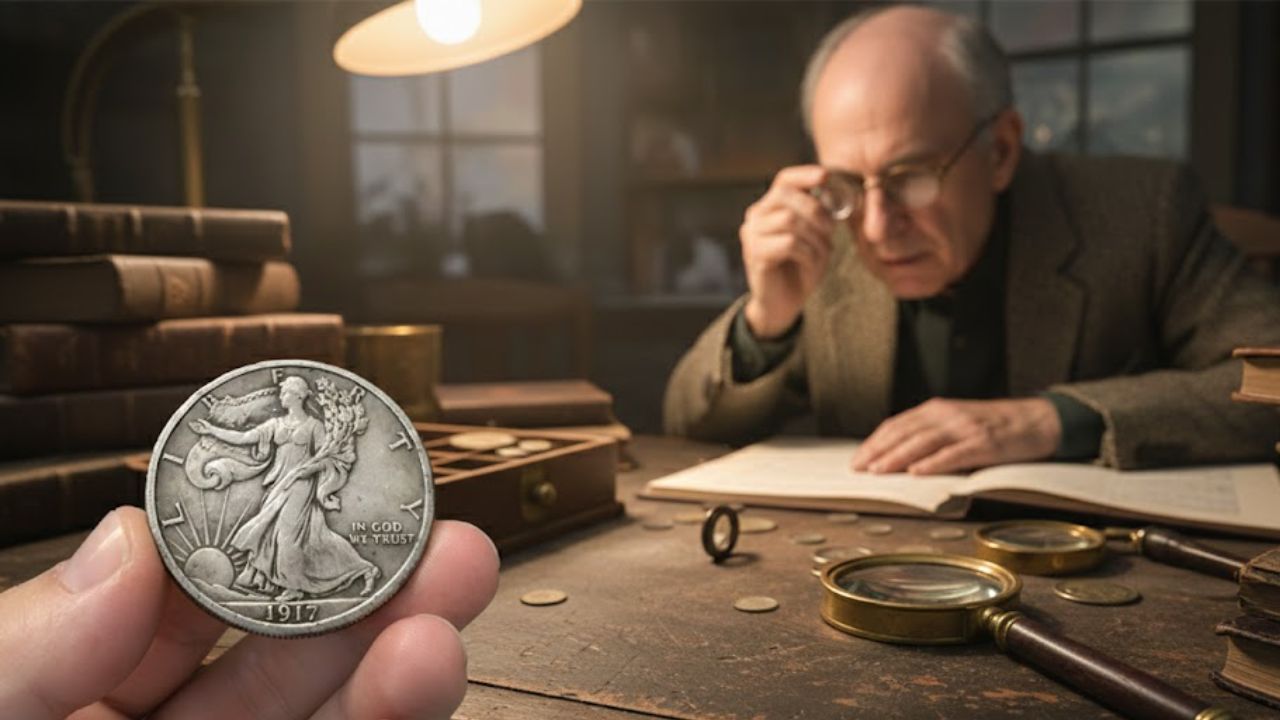
1917 Walking Liberty Half Dollar: The Walking Liberty half dollar series, produced between 1916 and 1947, is widely admired for its elegant design and deep symbolic meaning. Sculpted by Adolph A. Weinman, the coin presents Lady Liberty moving confidently toward a rising sun, wrapped in the American flag. Within this iconic series, the 1917 Walking Liberty half dollar holds special importance, as select varieties and top-condition examples have achieved values as high as $175,000.
1917 Walking Liberty Half Dollar Overview
| Aspect | Details |
|---|---|
| Years of Series | 1916 to 1947 |
| Designer | Adolph A. Weinman |
| Composition | 90 percent silver, 10 percent copper |
| Mints | Philadelphia, Denver, San Francisco |
| Special Feature | Obverse and reverse mint mark varieties |
| Top Value Range | Up to $175,000 |
Historical Background
The Walking Liberty half dollar debuted during a transitional phase in American coinage. Older designs were being retired in favor of artwork that emphasized national ideals and artistic quality. Introduced as a replacement for the Barber half dollar, the series reflected a new vision supported by the United States Mint. The 1917 issue is especially notable because it was only the second year of production and the only year in which mint marks appeared in two different locations, unintentionally creating multiple collectible varieties.
Key Varieties of the 1917 Half Dollar
Several distinct versions of the 1917 Walking Liberty half dollar exist, each attracting different levels of collector interest. Coins struck in Philadelphia carry no mint mark and are more readily available, though high-grade examples remain valuable. The Denver Mint produced coins with a D mint mark placed on the obverse early in the year, a variety that is particularly scarce. Later, the mint mark was moved to the reverse, creating another recognized Denver issue. San Francisco followed a similar pattern, issuing coins with mint marks on both sides during the year.
Why the 1917 Walking Liberty Half Dollar Is Valuable
The strong value of this coin comes from a combination of limited supply, historical relevance, and collector demand. Obverse mint mark varieties are significantly harder to find than their reverse counterparts, especially in well-preserved condition. Beyond rarity, the coin’s refined artwork and connection to an important era in U.S. history further elevate its appeal.
Auction Records and Market Value
Auction appearances of high-quality 1917 Walking Liberty half dollars consistently draw attention. Coins displaying sharp strikes, clear gown lines on Liberty, and well-defined eagle feathers often command premium prices. In exceptional condition, some examples have reached or approached the $175,000 mark, confirming their status as standout pieces in American numismatics.
The Role of Condition
Condition plays a decisive role in determining market value. Even slight wear or weak striking can greatly reduce a coin’s worth. Uncirculated examples with original luster and strong detail are the most desirable, which is why collectors rely heavily on professional grading to establish authenticity and quality.

Collector Insights
Understanding the difference between obverse and reverse mint mark placements is essential
Carefully evaluate strike sharpness, as detail strongly affects value
Store coins in protective holders to avoid surface damage
Use professional grading services for rare or high-grade finds
Monitor auction trends to stay informed about current market levels
Final Verdict
The 1917 Walking Liberty half dollar stands as both a work of art and a historical artifact. With rare varieties and pristine examples valued up to $175,000, it remains one of the most desirable silver coins in U.S. collecting. Its lasting appeal shows how thoughtful design, limited availability, and careful preservation can transform a half dollar into a numismatic treasure.
Disclaimer
Coin values can vary widely based on condition, grading standards, and market demand. Prices mentioned reflect notable auction results and should not be considered fixed or guaranteed. Always consult reputable numismatic professionals before making buying or selling decisions.